Tuesday, March 23, 2010

Friday, March 19, 2010

ZERO Charger a Stake Through the Heart of Vampire Power

By BC Upham | Triple Pundit
No, it’s not an euphemism for a two-year-old cellphone battery. The new ZERO Charger from AT&T, in stores in May, automatically cuts off the electrical circuit when not charging, eliminating wasted electricity, also known as “vampire power.”

The US Department of Energy estimates internal and external adapters burn through about 120 billion kilowatt hours (kWh) per year of electricity wasted as heat, costing consumers more than $12 billion in electric bills.

Why don’t we have these already?

The ZERO charger, which AT&T calls a “global first,” incorporates a circuit which senses when the charged device is disconnected and breaks the electrical circuit. The “block and cable” design gives it universal compatibility, and AT&T said the ZERO will cost the same as existing replacement chargers.
The ZERO will come in recycled paper packaging, part of AT&T efforts to reduce the amount of waste in its product packaging.

More good news on the charger front

In February, the GSMA announced a deal with major cellphone manufacturers to introduce a single standard for power adapters by 2012, eliminating the need to have a different adapter for each brand of handset. The new standard could have a huge positive environmental impact, reducing the amount of plastic wasted on those little black boxes worldwide.

Tuesday, March 16, 2010

Monday, March 1, 2010

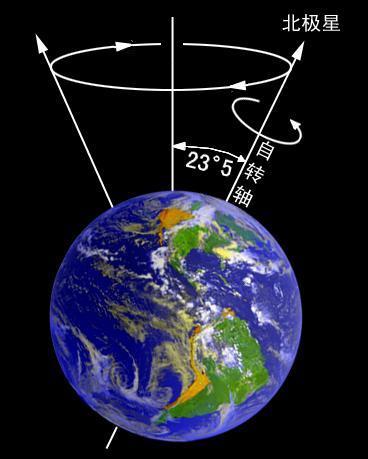
Earthquake in Chile Knocks Earth Rotation, May Have Shortened Days

From NASA.gov:
The Feb. 27 magnitude 8.8 earthquake in Chile may have shortened the length of each Earth day.
JPL research scientist Richard Gross computed how Earth's rotation should have changed as a result of the Feb. 27 quake. Using a complex model, he and fellow scientists came up with a preliminary calculation that the quake should have shortened the length of an Earth day by about 1.26 microseconds (a microsecond is one millionth of a second).
Perhaps more impressive is how much the quake shifted Earth's axis. Gross calculates the quake should have moved Earth's figure axis (the axis about which Earth's mass is balanced) by 2.7 milliarcseconds (about 8 centimeters, or 3 inches). Earth’s figure axis is not the same as its north-south axis; they are offset by about 10 meters (about 33 feet).
By comparison, Gross said the same model estimated the 2004 magnitude 9.1 Sumatran earthquake should have shortened the length of day by 6.8 microseconds and shifted Earth's axis by 2.32 milliarcseconds (about 7 centimeters, or 2.76 inches).
Gross said that even though the Chilean earthquake is much smaller than the Sumatran quake, it is predicted to have changed the position of the figure axis by a bit more for two reasons. First, unlike the 2004 Sumatran earthquake, which was located near the equator, the 2010 Chilean earthquake was located in Earth's mid-latitudes, which makes it more effective in shifting Earth's figure axis. Second, the fault responsible for the 2010 Chiliean earthquake dips into Earth at a slightly steeper angle than does the fault responsible for the 2004 Sumatran earthquake. This makes the Chile fault more effective in moving Earth's mass vertically and hence more effective in shifting Earth's figure axis.
Gross said the Chile predictions will likely change as data on the quake are further refined.
Alan Buis
818-354-0880

Thursday, February 18, 2010

Andromeda Galaxy...now in blue

NASA has just released the first images from its Wide-field Infrared Survey Explorer (WISE). WISE's primary mission is to survey the entire sky in infrared, though it's also tasked with tracking asteroids, comets, and other objects.
Here the shortest-wavelength camera on WISE highlights the Andromeda galaxy's older stellar population in blue.

Tuesday, February 16, 2010

Snowpocalypse or Snowmaggedon?

The Moderate Resolution Imaging Spectroradiometer (MODIS) on NASA’s Terra satellite captured this true-color image on February 7, 2010, showing part of the region affected by heavy snowfall. Snow blankets the area hundreds of kilometers inland from the Atlantic coastline. Along the latitude of New York City, however, snow cover thins considerably. More here.

Friday, February 12, 2010

Spot the Trend?

Geothermal Heat Pump Shipments by Tons, 2004-2008

From the DOE's EIA Report

Monday, February 8, 2010

Friday, February 5, 2010

Ramping Up for Clean Energy

OK, on a commercial roll here, but at least this one's about the upcoming energy policy cage match. You never know, we might win one sometime...